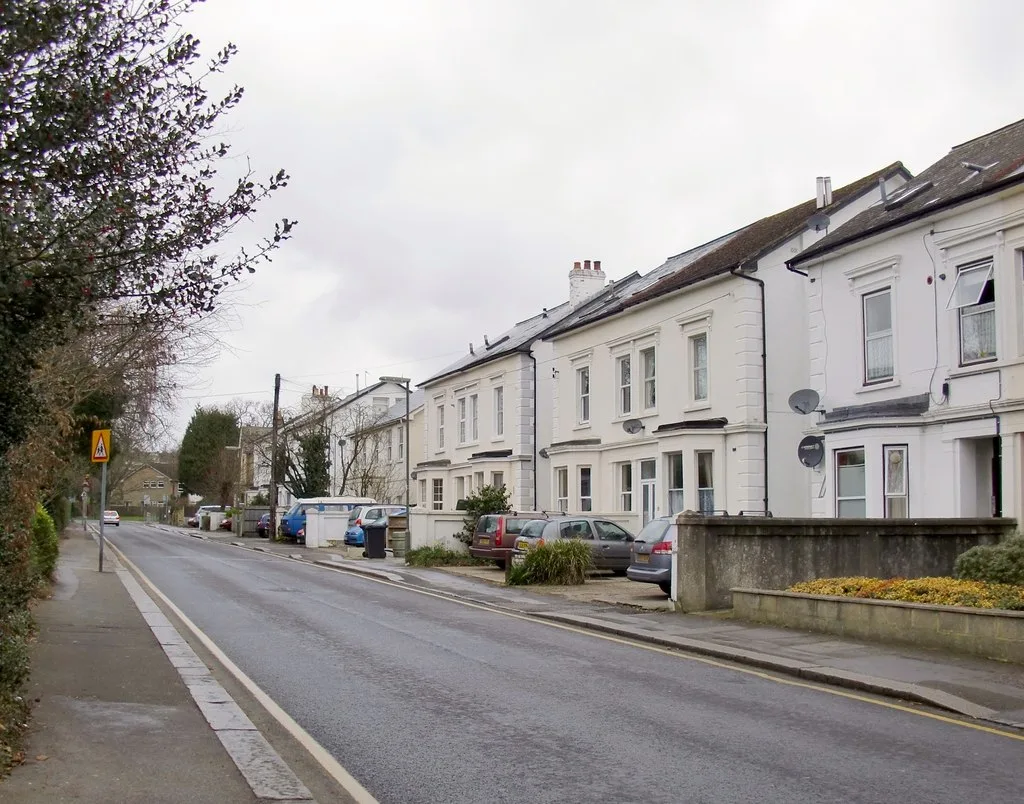

Small house shares would need planning permission from 30 July 2027. Licensed 5 to 6 person HMOs here are up 400% since 2019. Comments close 24 September.
Turning a house in Reigate & Banstead into a small house share is currently something a landlord can do without asking the council. That is what the borough council now proposes to change, and the eight-week window to comment on it closes on Thursday 24 September 2026.
The council formally notified an Article 4 direction on 30 July. If confirmed, it would remove the national permitted development right that lets a family home (planning Use Class C3) become a small HMO for three to six residents (Use Class C4) with no planning application. From 30 July 2027, those conversions would need full planning permission across the whole borough (council consultation page).
The evidence the council put to its Planning Committee on 23 July is more revealing than the press release. It shows where the borough’s house shares actually are, and how fast one particular category has grown.
The number behind the proposal
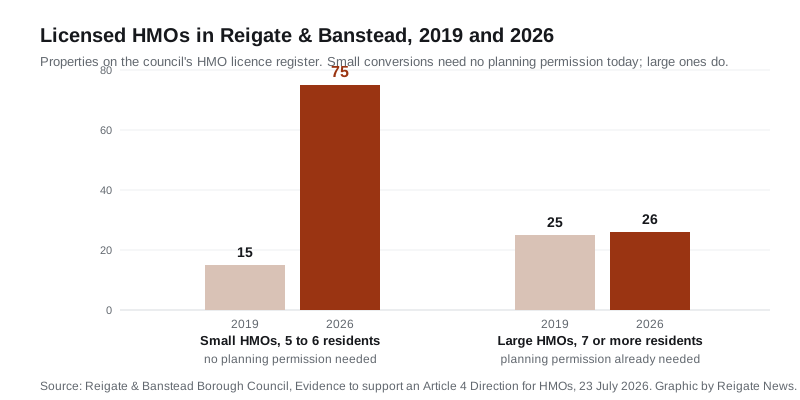
Mandatory licensing covers HMOs with five or more occupants, so the council’s Environmental Health register is the one hard count available. In 2019 it held 40 licensed HMOs: 15 in the C4 small category, and 25 large ones with seven or more residents.
By February 2026 the register held 101. The split is the story:
- Small licensed HMOs, five to six residents: 15 in 2019, 75 in 2026. That is the 400% rise the council leads on.
- Large HMOs, seven or more residents: 25 in 2019, 26 in 2026. Effectively flat over eight years.
Large conversions already need planning permission. Small ones do not. All the growth has happened in the category nobody has to apply for.
The three and four person house shares are invisible by design: they need neither a licence nor permission. To estimate them, officers applied the 32.9% growth in the licensed register between 2021 and 2026 to the 120 small HMOs recorded in the borough at the 2021 Census, giving roughly 159 today. A separate search of planning records and the electoral register identified 109 properties officers are reasonably confident are unlicensed HMOs. They also found more than 500 properties with three registered voters of different surnames, which was too broad to check, since a couple with a lodger is not an HMO.
Where they are
The report is blunt about the geography. Licensed and unlicensed HMOs follow the same pattern, “predominantly located within Redhill and Horley”, with Reigate, Merstham and Salfords also showing reasonably high concentrations. The north of the borough is “relatively unaffected”.
By ward, the majority sit in four:
- Horley Central & South
- Redhill East
- Redhill West & Wray Common
- Earlswood & Whitebushes
That matters for anyone reading this in Banstead, Tadworth, Kingswood or Woodmansterne. The direction would apply borough-wide, but the pressure it responds to is concentrated in the south and centre.
What the council says has gone wrong
Two enforcement measures moved sharply.
Planning enforcement cases involving HMOs ran at two to five a year between 2016 and 2022. In 2025 there were 16.
Environmental Health complaints about HMOs held roughly steady from 2018, apart from a 2021 spike the council attributes to clearing a Covid backlog. In 2025 they rose to about double the level of previous years. The report says the detail recorded is too inconsistent to break down by issue, but lists what the complaints generally cover: suspected unlicensed HMOs, overflowing bins, noise, parking, antisocial behaviour, poor maintenance and overcrowding.
Meanwhile, the formal planning record barely registers any of it. Over ten years the council granted a maximum of two certificates of lawfulness for small HMO conversions and three permissions for large ones in any single year.
Cllr Kate Fairhurst, Executive Member for Place, Planning and Regulatory Services, said the proposals “are not about preventing them”, adding: “We have seen an increase in the number of HMOs in the borough and complaints about them. So, we want to put planning checks in place to help us make sure that future HMOs are in appropriate locations, are well designed, and do not have a negative impact on local communities” (council announcement).
The catch the council admits to
An Article 4 direction does not ban anything. It only forces an application, which the council then judges against its existing planning policies. And on the council’s own reading, those policies are thin here.
Its Development Management Plan, adopted in 2019, “does not include any HMO-specific policy and offers very limited scope to resist proposals on character or over-concentration grounds”. The report works through what officers could use: design policy DES1 to secure proper bin storage, DES5 to apply the national space standard of at least 7.5 square metres for a single bedroom, and parking policy TAP1, which it concedes is “problematic” for HMOs because the standards are written for flats and houses by bedroom count.
In other words, the direction would give the council a look at each conversion, but not much to refuse one with until an HMO policy exists. The borough’s new Local Plan to 2044, which began work on 31 July, is the document that would have to supply it.
How the borough compares
Officers surveyed 17 authorities: every Surrey council, the London boroughs of Croydon and Sutton, plus Crawley, Horsham and Mid Sussex. Five have an Article 4 direction in force, and four of those border Reigate & Banstead.
Measured by licensed HMOs as a share of total housing stock, Reigate & Banstead ranks 11th of the 17, which is worth holding on to: this is not a borough with an unusual concentration of house shares by regional standards. Guildford and Runnymede, which have the highest prevalence because of their universities, both examined the case for an Article 4 direction and decided not to proceed.
Among those that did act, Crawley and Tandridge targeted specific areas, while Sutton, Croydon and Spelthorne went borough-wide. Crawley’s direction, in force since June 2022, covers about 300 three-storey townhouses across ten areas. Reigate & Banstead officers met Crawley’s policy team and were told that, anecdotally, landlords had been steered away from the targeted areas.
The council also looked at additional licensing, which would extend licences to three and four person HMOs, as Woking and Sutton have done and Croydon does from 1 September 2026. Its Environmental Health team’s view is that the borough would not meet the three statutory tests required, so it is not being pursued.
What it means for you
If you are a landlord or considering a conversion. Nothing changes yet. The direction is being made under the “non-immediate” procedure, which requires a 12-month notification period and means no compensation is payable by the council. It would come into force on 30 July 2027, and from that date a conversion from a dwellinghouse to a three to six person HMO would need a full planning application, judged like any other. Seven-plus person conversions already do.
If you live next to a house share. The direction would not affect anything already lawfully in use. What it changes is the council’s sightline over future conversions: it would consult on each one, and its Private Sector Housing team could be asked to comment on room sizes and standards before a decision.
If you want to comment. Send representations by email to planning.policy@reigate-banstead.gov.uk, or in writing to Planning Policy, Town Hall, Castlefield Road, Reigate, Surrey, RH2 0SH, by Thursday 24 September. The council states plainly that comments made on social media will not count as official representations. The proposals can also be inspected at the Town Hall in Reigate, 9am to 4pm on weekdays. After the consultation the council decides whether to confirm the direction, subject to any intervention by the Secretary of State.
For context on how the borough’s wider development decisions are being taken, see our Reigate planning news page and our guide to Reigate planning applications.
Sources
- Reigate & Banstead Borough Council, Article 4 direction for Houses in Multiple Occupation
- Reigate & Banstead Borough Council, Evidence to support an Article 4 Direction for Houses in Multiple Occupation, 23 July 2026 (PDF)
- Reigate & Banstead Borough Council, Council seeks views on proposed planning controls for small HMOs, 30 July 2026
Have your say